Irreversible choices and roads not taken
Out Stealing HorsesIrreversible choices and roads not taken become a visible structure in Trond’s memory of an encounter in Karlstad: possible paths branch around him, but action would close off alternatives and set consequences in motion. By refraining from striking a stranger, he preserves one life-path rather than another, and later rejects the comforting idea that either choice would have led to the same result.
The choice in Karlstad
The decision takes shape after a stranger warns Trond that he will call the police if Trond hits him. Trond’s hand clenches, and he hears himself threaten that they will soon find out what happens. The response feels unfamiliar to him; he has never spoken that way to anyone before. The moment is therefore not merely a confrontation with another person but a recognition that he is approaching a choice he cannot take back.
Trond imagines himself at the centre of a diagram, with lines running outward like shining arrows. Each line represents a road he could take. If he strikes the man, the choice will trigger a chain reaction that no one can stop; there will be no return to the point before the blow. The image gives a sudden, concrete form to the difference between possibility and consequence: while the alternatives remain open, he can still choose, but acting would make one future real at the expense of the others.
Refusal and interruption
Trond insults the man but does not hit him. His clenched hand relaxes, and he notices disappointment on the stranger’s face. The gesture marks the decision physically, while the stranger’s reaction leaves the encounter’s motives partly unexplained: Trond does not understand why the man might have preferred to be struck and call the police. The account keeps that uncertainty intact rather than resolving it.
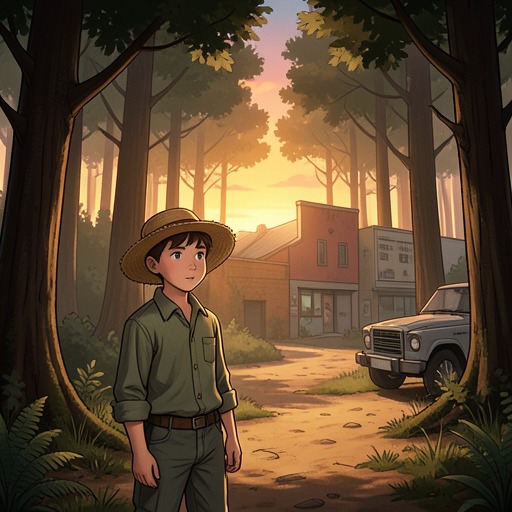
At that moment, Trond’s mother calls from farther down the street to say that the Wärmlandsbank has arrived. She has not noticed what was happening at Trond’s end of the street. Her call interrupts the confrontation and draws him out of the imagined circle: the arrows stop shining, and the diagram dissolves. The choice has already been made. The interruption does not erase the stakes; instead, it carries the scene from a private reckoning back into the ordinary errand for which they came to Karlstad.
The alternative life
More than fifty years later, Trond can still clearly picture the branching lines. Their persistence makes the episode more than a remembered near-fight: it remains a reference point for thinking about how a single action might divide a life into different versions. He insists that if he had struck the man, his life would have been different and he would have been a different man. He also refuses the claim that events would somehow have arrived at the same outcome regardless of his choice.
Trond calls himself lucky, but the scene grounds that judgment in a specific act of restraint. Luck does not mean that the alternatives were inconsequential or that fate would have produced the same destination by another route. The image of the closed portcullis and raised drawbridge instead emphasizes the cost of crossing from possibility into action: once the choice is made, the road not taken remains imaginable, but it cannot be retraced.